Case Studies 5-A & 5-B: iPhone/Theodolite (compass app)

Row, row, row your boat gently up/down the stream???
Purpose: This blog is created to help readers a) better understand electronic compass [smartphone or rangefinder] residual azimuth deviation errors b) quantify the errors, c) model the errors, d) compensate for [correct] the errors, and e) influence their app vendor to apply the correction method within the affected smartphone app. Basically, we need to know (accurately) whether to go up / down the stream (path) we are traveling on.
Background: (Case Study 5-A)
This post will present the test results of the iPhone/Theodolite compass app operated at the Birmingham, AL test site (A) with a strong magnetic/electromagnetic field. Recall that a previous post in this series presented the test results of the Vectronix PLRF25C laser rangefinder (with compass) operating in the Birmingham, AL test site with a strong magnetic/electromagnetic field.
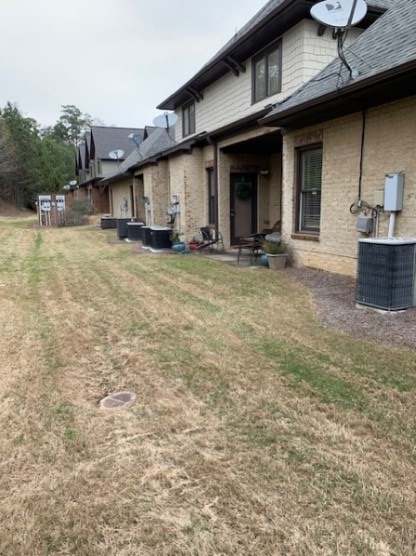
The Birmingham, AL (5-A) test site is set in an urban environment with strong magnetic/electromagnetic influences including:
- An electric power distribution station for eight (8) townhomes
- At least eight operating heating/cooling (heat pump) units of 3 to 4 ton capacity – aligned North/South within 50 feet of the test site (East side)
- An active highway – aligned North/South within 150 feet of the test site (West side)
Preview: A subsequent test of the iPhone/Theodolite compass app will take place at the Picayune, MS test site (5-B) which exists in a 20 acre cow pasture with minimal magnetic/electromagnetic influence (field). The cattle were curious (disruptive) about what was taking place in their pasture. Recall that the Picayune, MS test site is 264 miles southwest of the Birmingham, AL test site.
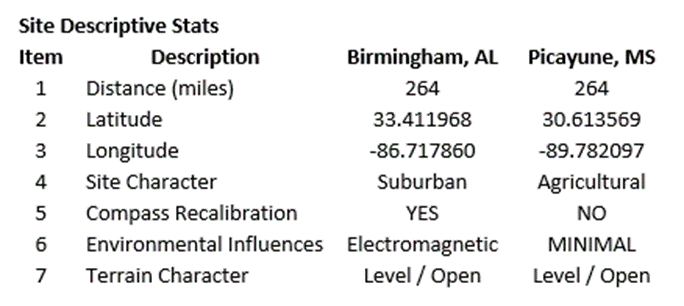
Three major issues at the forefront of these tests include:
- What is the impact (if any) of changing location (latitude change) on the effectiveness of the method for correcting residual compass (azimuth) deviation errors – for the iPhone/Theodolite compass app? Fact: The earth’s magnetic field strength changes with the geographic location of the observer.
- What is the impact (if any) of changing the operating environment (from a strong to a minimal magnetic/electromagnetic influence) on the effectiveness of the method for correcting residual compass (azimuth) deviation errors – for the iPhone/Theodolite compass app? Fact: Electronic compass results (azimuth readings) are impacted by environmental influences.
- What is the impact (if any) of not recalibrating the rangefinder compass (calibrate at Birmingham, AL site/no recalibration at Picayune, MS site) on the effectiveness of the method for correcting residual compass (azimuth) deviation errors – for the iPhone/Theodolite compass app? Fact: The author was entirely willing to accept any error that may result from the decision not to recalibrate the device being tested – relying on the capabilities of the compensation method to correct the potential azimuth errors.
The Test Results (5-A)
The data collection equipment and procedures used at test site A (Birmingham, AL) were identical to those used at test site B (Picayune, MS). Also, these data collection procedures were the same as used for testing the compass accuracy of the Vectronix PLRF25C laser rangefinder – refer to the earlier post.
At both test sites, the reference direction (True North) was established using sun position – a correct, defendable, and independent reference direction.
- True North (reference direction) was established based on the sun position relative to each test site’s geographic location on the date/time of each test.
- The iPhone compass was set to indicate azimuths relative to True North.
- The iPhone compass was recalibrated prior to the tests performed at the Birmingham, AL test site (5-A).
Recall: The residual compass deviation error persists throughout the entire 360 degree range of measurement. The following data table presents the collected azimuth data collected (yellow) and the associated azimuth deviation error (orange).
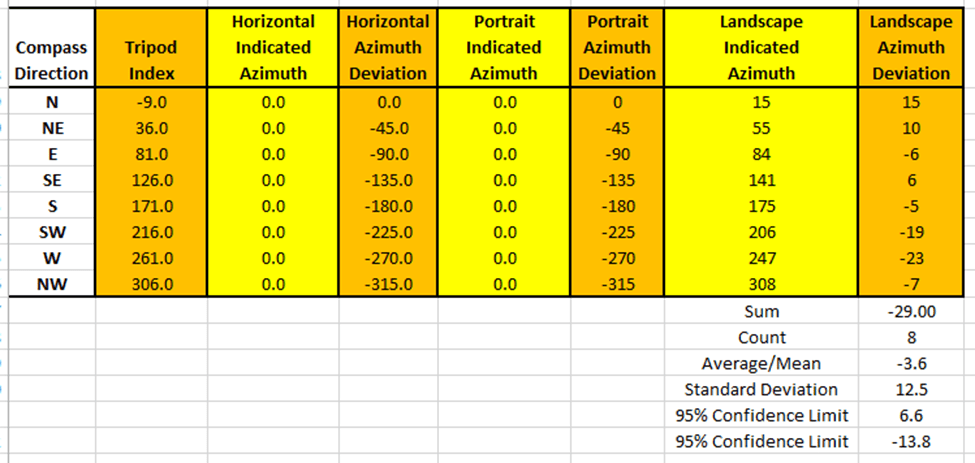
Notice that the data collection operations with the iPhone/Theodolite compass app were performed using only one iPhone orientation – Landscape.
Observation: As we proceeded with the each compass app (one after another), we have noticed that (apparently) each app had its own internal proprietary processing procedure to provide its “best” result for each azimuth reading – yet each app’s azimuth deviation (error) values were unique. Also, each compass app had its own quirks relative to the data collection process. For instance, due to the sensitivity of some apps, the data collection process was executed as follows: (using ONLY)
- Slow, deliberate movements
- Clockwise rotations
- Left-to-right motions
- No jerky movements
It is interesting to contrast (graphically) the residual compass azimuth deviation errors across multiple apps (refer back to prior posts) – to determine the consistency (or lack thereof) between apps being executed on a single smartphone. In general,
- The shapes of the iPhone compass app (error) curves are relatively consistent – for all the tests, the data was collected using the same iPhone, on the same day, and in the same location.
- The relative positions of each (Horizontal, Portrait, and Landscape) curve were relatively consistent – refer back to prior posts.
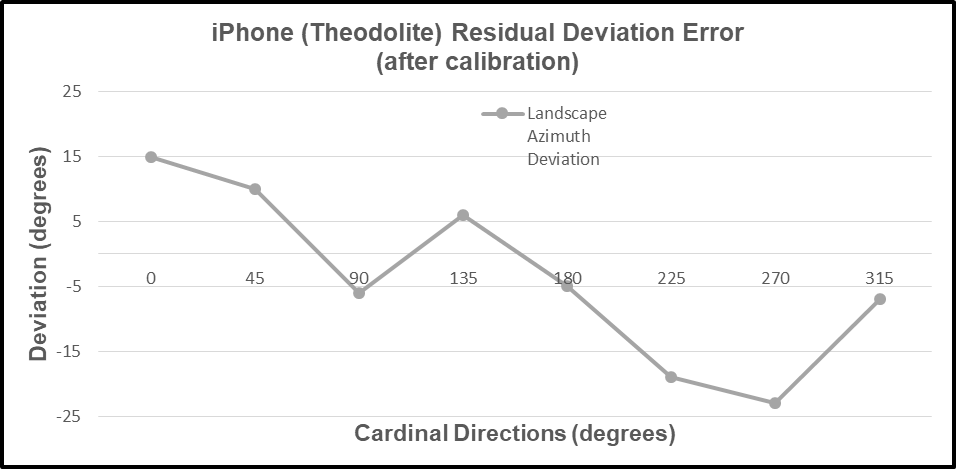
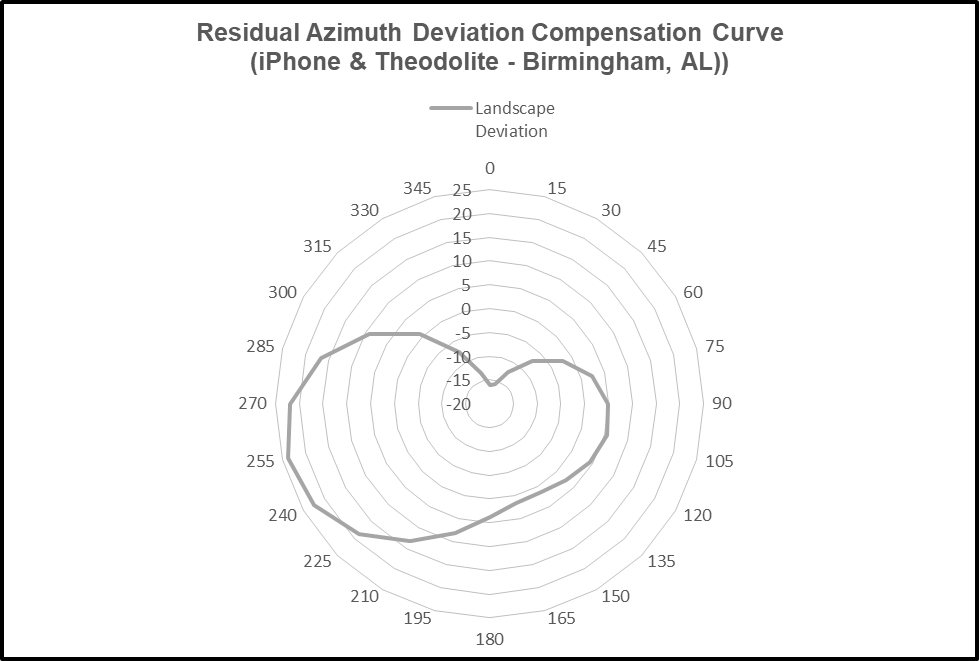
The “modeled” deviation curve (derived from the residual deviation error) for the iPhone/Theodolite compass app is presented below. The modeled residual azimuth deviation compensation curve is presented in two different formats to allow the reader to seriously consider the deviation error – as measured throughout the full 360 degree range of measurement.

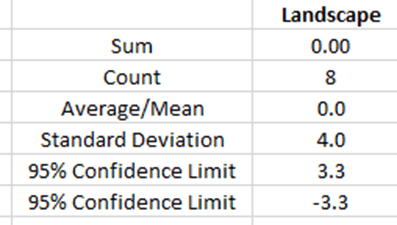
The compensated deviation errors (remaining azimuth errors after compensation) for the iPhone/Theodolite compass app are depicted below. Again, two display formats are provided to strengthen the perceived impact of the compensation method.

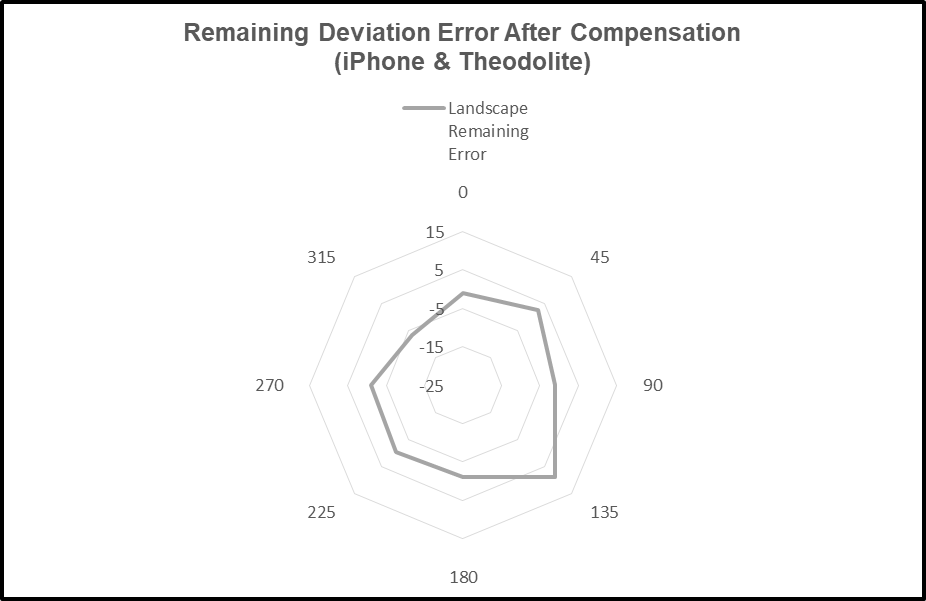
The predicted deviation errors for the iPhone/Theodolite compass app are depicted in the following chart. The predicted error curve is the negative of the deviation curve; and the compensation method proved quite effective.
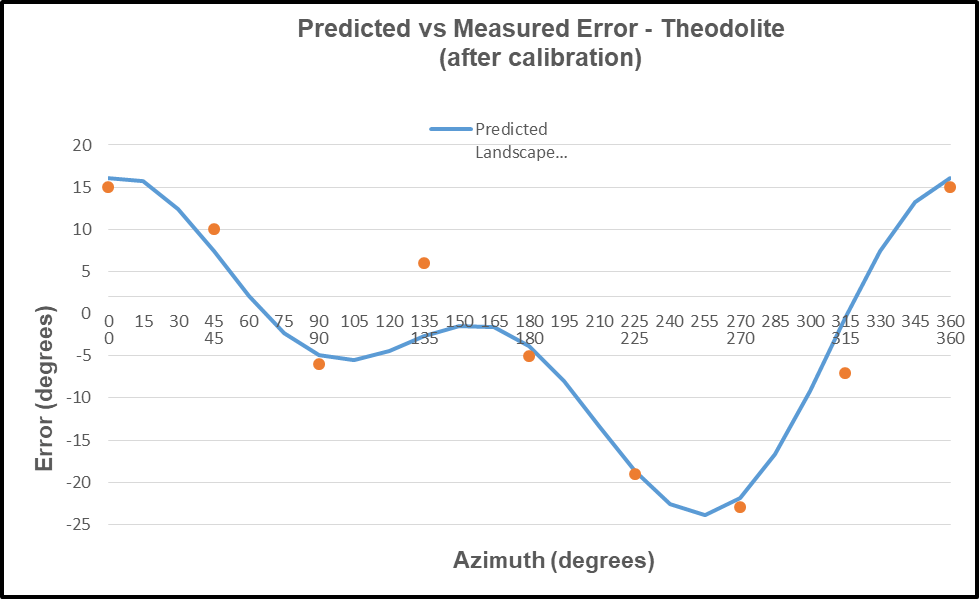
The reader should note that the Vectronix rangefinder azimuth readings (prior post) indicated a stable electronic compass and software; while the iPhone apps do not necessarily live up to the Vectronix standard. It seems apparent that the iPhone app vendors all have their own preferences for handling the data provided by the iPhone electronic compass; and some vendors have gone to great lengths in their attempt to provide a good azimuth reading – with not much success. Some observations made during the author’s attempt to capture good azimuth readings from the iPhone apps are offered below.
- For certain apps, rotating the iPhone very slowly can result in NO change in the reported azimuth value. Tapping the iPhone (after rotating with no change) can result in a sudden change to a new azimuth value – the apparent “correct” value.
- For certain apps, rotating the iPhone in an anticlockwise direction can give results that are slightly different from those obtained when using a clockwise rotation – repeatability not so good.
- For certain apps, avoid jerky motions – unexpected results may appear.
- For certain apps, the results provided change with time – even a few seconds make a difference.
- For all apps, the reader should have a little patience in order to capture the best data possible.
Background: Case Study 5-B
This part of the case study will present the test results of the iPhone/Theodolite compass app operated at the Picayune, MS test site with a minimal magnetic/electromagnetic field.
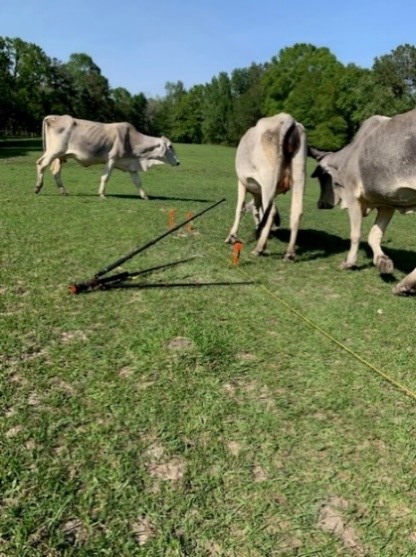
The Picayune, MS test site exists in a 20 acre cow pasture with minimal magnetic/electromagnetic influence (field). The cattle were curious (disruptive) about what was taking place in their pasture. Recall that the Picayune, MS test site is 264 miles southwest of the Birmingham, AL test site.
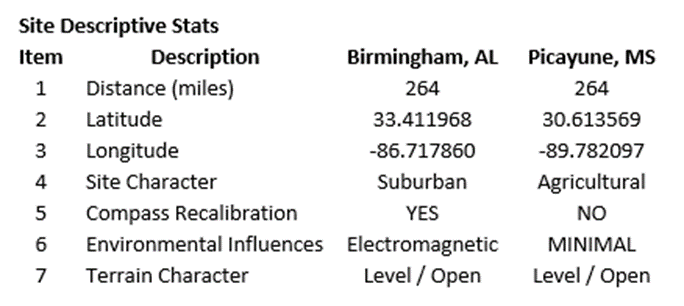
Recall: Three major issues at the forefront of these tests include:
- What is the impact (if any) of changing location (latitude change) on the effectiveness of the method for correcting residual compass (azimuth) deviation?
- What is the impact (if any) of changing the operating environment (from strong to minimal magnetic/electromagnetic influence) on the effectiveness of the method for correcting residual compass (azimuth) deviation errors?
- What is the impact (if any) of not recalibrating the rangefinder compass (calibrate at Birmingham, AL site/no recalibration at Picayune, MS site) on the effectiveness of the method for correcting residual compass (azimuth) deviation errors?
The Test Results (5-B)
Recall that the data collection equipment and procedures used at test site A (Birmingham, AL) were identical to those used at test site B (Picayune, MS). Also, these data collection procedures were the same as used for testing the compass accuracy of the Vectronix PLRF25C laser rangefinder – refer to the earlier post.
- True North (reference direction) was established based on the sun position relative to each test site’s geographic location on the date/time of each test.
- The iPhone compass was set to indicate azimuths relative to True North.
- The iPhone compass was NOT recalibrated at the Picayune, MS site.
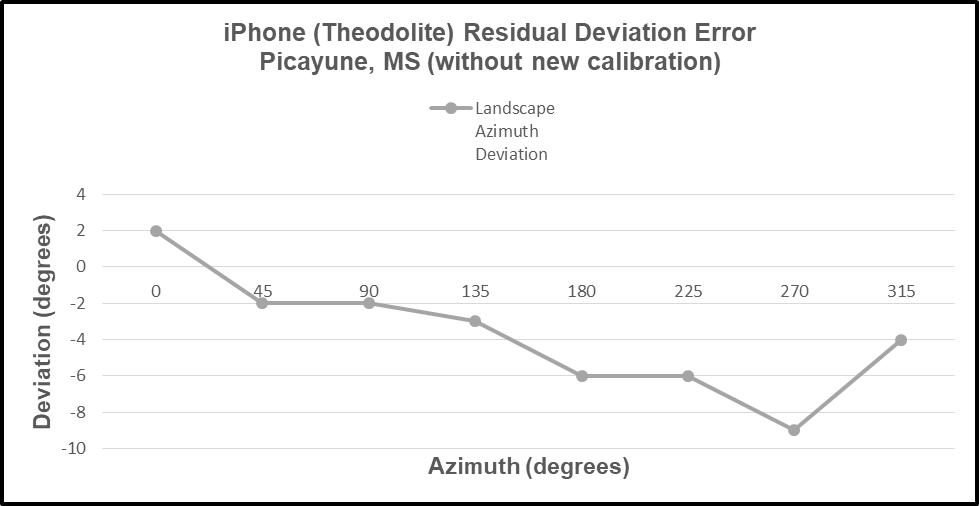
Recall: The residual compass deviation error persists throughout the entire 360 degree range of measurement. The following data table presents the collected azimuth data collected (yellow) and the associated azimuth deviation error (orange).
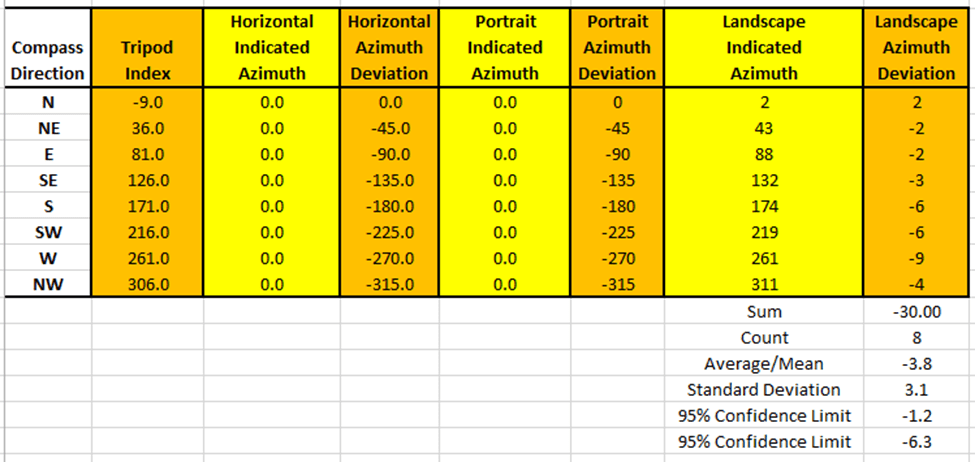
Notice that the data collection operations with the iPhone/Theodolite compass app were performed using one iPhone orientation – Landscape.
Again, all the quirks of the iPhone compass apps tested were “respected” and considered while capturing the azimuth error data.
Again, it is interesting to contrast (graphically) the residual compass azimuth deviation errors across multiple apps – to determine the consistency (or lack thereof) between apps being executed on a single smartphone.
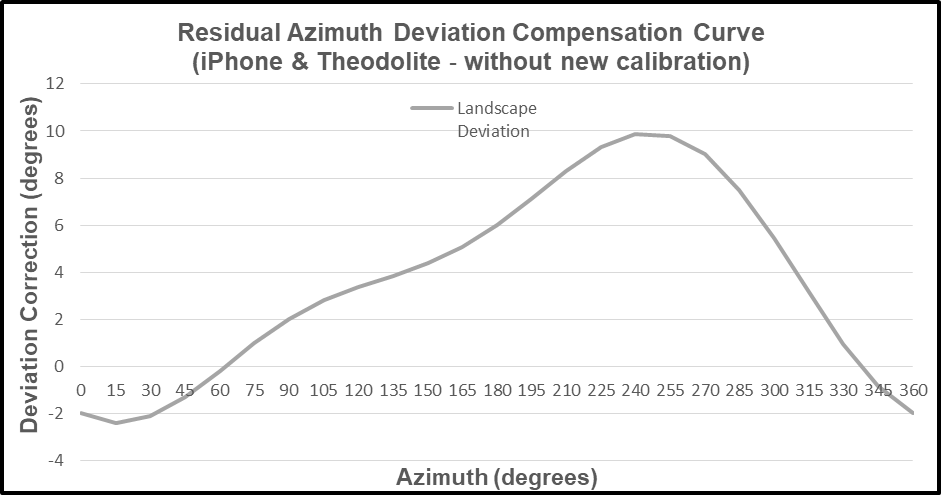
The “modeled” deviation compensation curve (derived from the residual deviation error) for the iPhone/Theodolite compass app is presented below. The modeled residual azimuth deviation compensation curve is presented in two different formats to allow the reader to seriously consider the deviation error – as measured throughout the full 360 degree range of measurement.
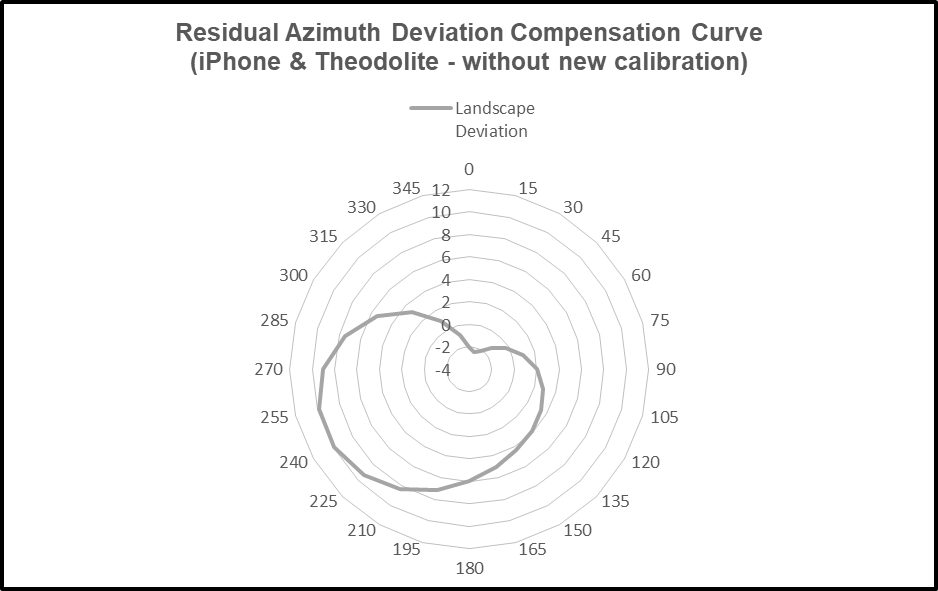
The compensated deviation errors (remaining azimuth errors after compensation) for the iPhone/Theodolite compass app are depicted below. Again, two display formats are provided to strengthen the perceived impact of the compensation method.
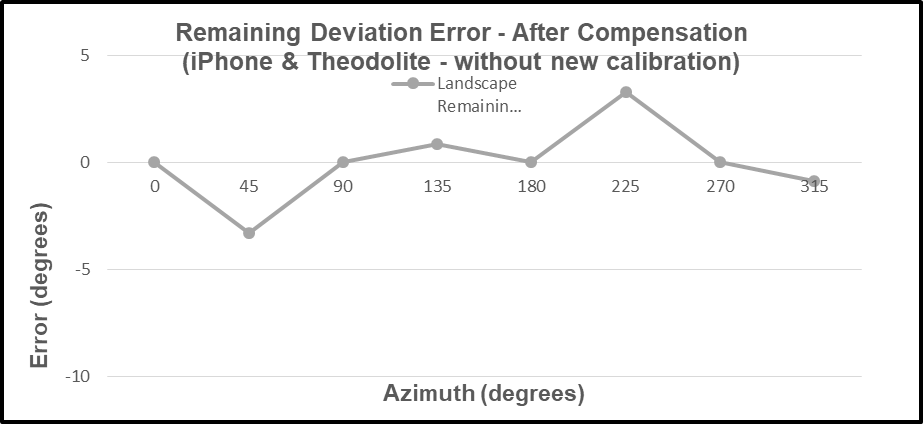
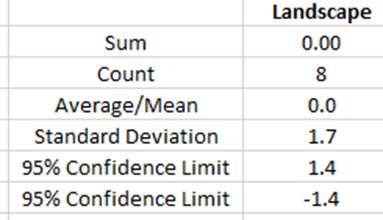
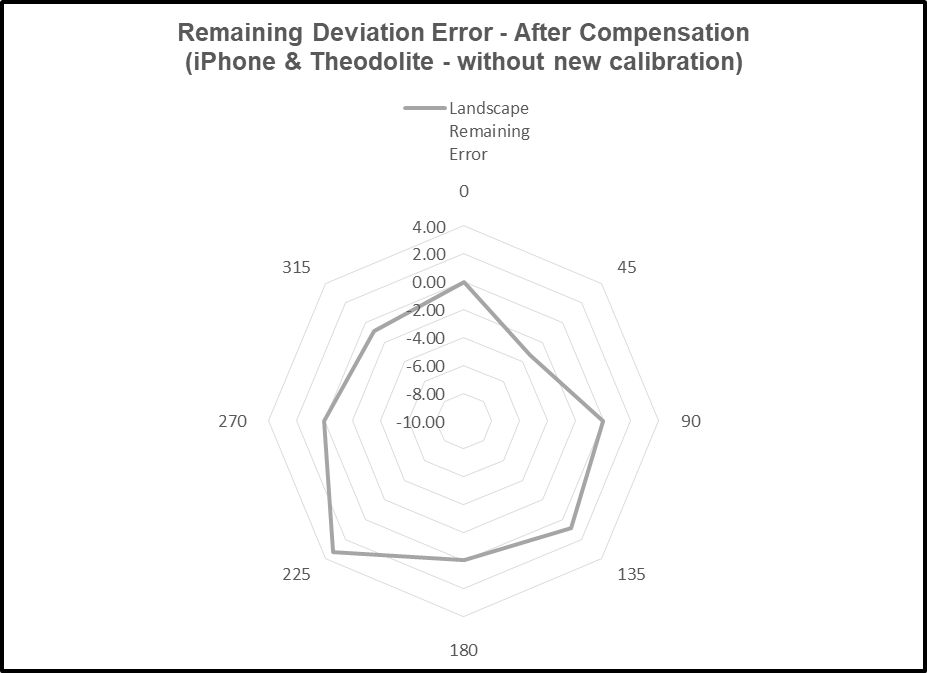
The predicted deviation errors for the iPhone/Theodolite compass app are depicted in the following chart. The predicted error curve is the negative of the deviation curve; and the compensation method proved quite effective.
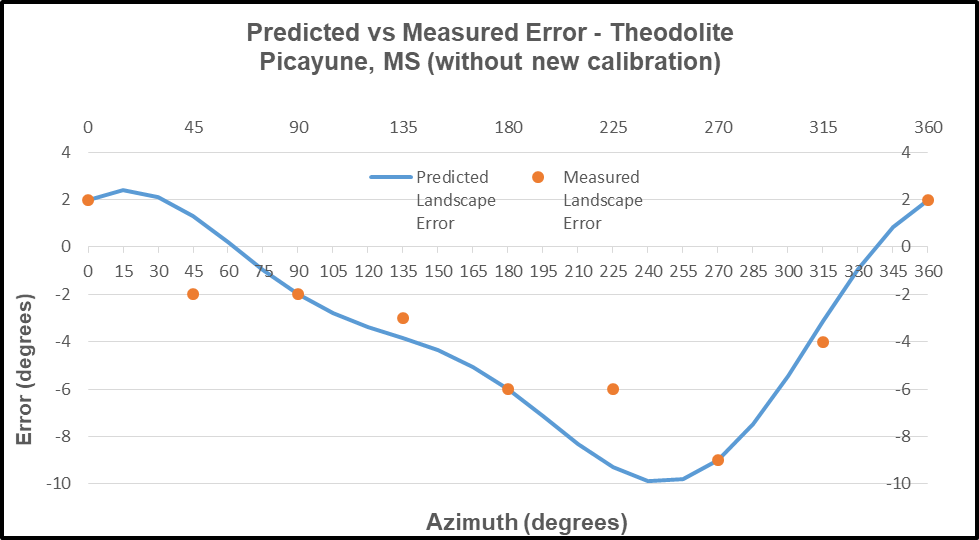
Now, we can assess the impact of the three issues identified in the “Background” portion of this post.
- What is the impact (if any) of changing location (latitude change) on the effectiveness of the method for correcting residual compass (azimuth) deviation errors? Response: Minimal
- The two test sites were located 264 miles apart in a SW-NE direction; and the compensation method performed well.
- The iPhone compass was calibrated at the Birmingham, AL test site; while the iPhone compass was NOT recalibrated at the Picayune, MS test site; and the compensation method performed well.
- What is the impact (if any) of changing the operating environment (minimal magnetic/electromagnetic influence) on the effectiveness of the method for correcting residual compass (azimuth) deviation errors Response: Minimal
- For the iPhone/Theodolite compass app operating in a strong magnetic / electromagnetic influence field (Birmingham, AL), the experienced deviation error of (-13.8 < 95% Confidence Limit < +6.6); and that deviation error was corrected to (-3.3 < 95% Confidence Limit > +3.3).
- For the iPhone/Theodolite compass app operating in a minimal magnetic / electromagnetic influence field (Picayune, MS), the experienced deviation of (-6.3 < 95% Confidence Limit < -1.2); and that deviation error was corrected to (-1.4 < 95% Confidence Limit < +1.4).
- What is the impact (if any) of not recalibrating the rangefinder compass on the effectiveness of the method for correcting residual compass (azimuth) deviation errors. Response: Minimal
- The compensation method responded quite well.
- Refer to the following chart.

Again, the reader should note that the Vectronix azimuth readings indicated a stable (reliable) electronic compass and software (prior post); while the iPhone apps do not. It seems apparent that the iPhone app vendors all have their own preferences for handling the data provided by the iPhone electronic compass; and some vendors have gone to great lengths in their attempt to provide a good azimuth reading – with not much success. Some observations made during the author’s attempt to capture good azimuth readings from the iPhone apps are offered below.
- For certain apps, rotating the iPhone very slowly can result in NO change in the reported azimuth value. Tapping the iPhone (after rotating with no change) can result in a sudden change to a new azimuth value – the apparent “correct” value.
- For certain apps, rotating the iPhone in an anticlockwise direction can give results that are slightly different from those obtained when using a clockwise rotation – repeatability not so good.
- For certain apps, avoid jerky motions – unexpected results may appear.
- For certain apps, the results provided change with time – even a few seconds make a difference.
- For all apps, the reader should have a little patience in order to capture the best data possible.
Conclusions: (all case studies)
- It is clear that military grade electronic compass technology is far superior to the commercial grade smartphone (iPhone) technology; but it is also clear that the same approach to compensating for residual (after calibration) azimuth deviation errors can be used across this wide range of technology quality – effectively. The end user just doesn’t need to spend big bucks for the “best” technology.
- It is clear from these test results (all case studies) that this method for compensating residual compass azimuth deviation errors can be used across wide ranging expanses of geography.
- It is clear from these test results (all case studies) that this method for compensating residual compass azimuth deviation errors can be used even when the manufacturer’s calibration procedure is abused (not performed at each change of location) by the user – caution should be observed.
- For today’s modern smartphone technology, commercial smartphones do demonstrate similar residual (after calibration) compass azimuth deviation error patterns across multiple compass apps making use of the smartphone’s electronic compass; and those resulting errors can be corrected on an app-by-app basis.
- For the laser rangefinder and each of the smartphone apps analyzed, the method for compensation of residual compass azimuth deviation (errors) works quite well consistently – even though the pattern (magnitude and direction) of the original measured deviation (errors) was significantly different for each app analyzed.
- These case studies show clearly that vendor calibration procedures (although necessary) are not sufficient to correct for all external environmental magnetic/electromagnetic influences. Thus it is necessary and sufficient to a) perform the vendor’s prescribed compass calibration procedures and b) compensate for residual [after calibration] compass azimuth deviation errors using the method discussed in this case study.
- The modern smartphone electronic compass can be used as a valuable, reliable, and effective instrument for determining quality azimuth values in a real world setting provided that the manufacturer’s prescribed calibration procedures are faithfully executed in conjunction with this compensation method for residual compass azimuth deviation errors.
- When choosing an iPhone (smartphone) compass app, the user should choose wisely based on the app’s operating characteristics in real world environments. Users should consider (seriously) recommending this azimuth error compensation method to their compass app vendors – for easy implementation. The range of residual (after calibration) compass azimuth deviation errors encountered (considering both test sites and all compasses tested) can be characterized as follows:
- Vectronix -14 <= Deviation <= +6
- Compass 55 -25 <= Deviation <= +15
- Compass Deluxe -20 <= Deviation <= +20
- SpyGlass -10 <= Deviation <= +10 (one test only)
- Theodolite -25 <= Deviation <= +20
This post concludes the originally planned work; and the purpose of this work has been accomplished. As a continuation of this work, the author would like to evaluate a) additional laser rangefinders, b) some standalone electronic compasses, and c) additional smartphone apps which make use of the smartphone’s internal electronic compass.
Also, it is the author’s intention to release a new smartphone compass app in the near future which will a) provide compass users with a good/practical/useable/correctable app, b) allow users to evaluate the accuracy of any electronic compass/smartphone compass app and/or any laser rangefinder, and c) provide necessary and sufficient “correction” parameters to the vendors of smartphone/laser rangefinder devices to allow the vendors to correct their own residual compass azimuth deviation errors.
FOLLOW ME AND WATCH FOR MY FORTHCOMING ANNOUNCEMENT!
One response to “Fixing Rangefinder & Smartphone Residual Compass (azimuth) Deviation Errors – iPhone/Theodolite”
-
[…] https://wordpress.com/post/tru-path.org/627 […]
LikeLike
 Tru-Path
Leave a reply to Fixing Rangefinder & Smartphone Residual Compass (azimuth) Deviation Errors – List of Posts – Tru-Path Cancel reply